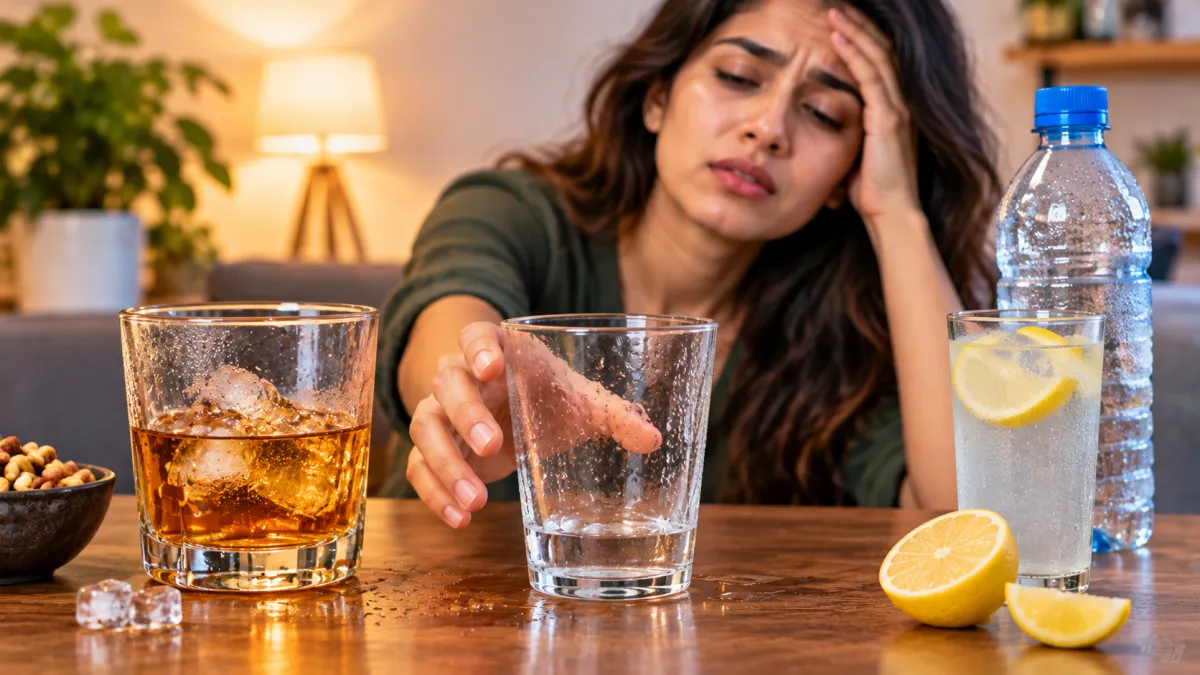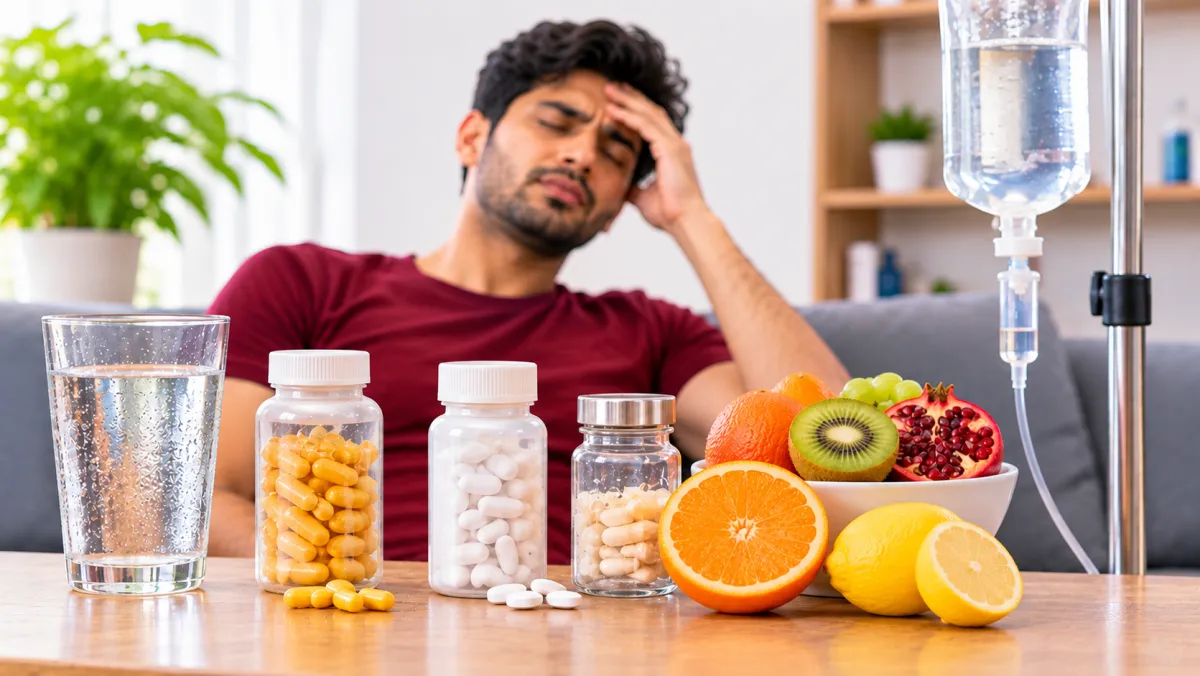
After a night of drinking, you may wake up with a headache, nausea, and low energy. You may also feel thirsty, tired, and unable to focus. As a result, many people look for vitamins to feel better. But do vitamins for a hangover actually work?
B vitamins, vitamin C, and glutathione are often discussed as hangover support nutrients. Each has a different role in the body. For example, B vitamins help convert food into energy. Vitamin C supports normal immune function. Meanwhile, glutathione helps protect cells from oxidative stress.
However, there is an important difference between supporting normal body functions and curing a hangover.
In this blog, we explain what research says about B vitamins, vitamin C, and glutathione. We also discuss food sources, supplements, safety, and how ivital.fit provides nutritional support through its vitamin drips.
Why Do You Feel Tired After Drinking Alcohol?
A hangover is a group of symptoms that can appear after drinking too much alcohol.
These symptoms may include:
- Headaches
- Nausea and vomiting
- Dry mouth and thirst
- Muscle weakness
- Poor sleep
- Dizziness
- Low energy
- Poor concentration
- Anxiety and irritability
However, alcohol does not cause these symptoms through one single process.
Instead, several factors may contribute.
Fluid loss: Alcohol can reduce the release of vasopressin. Consequently, your kidneys may produce more urine.
Poor sleep: Alcohol can disturb your normal sleep cycle. Therefore, you may wake up feeling tired.
Inflammation: Alcohol can trigger inflammatory responses in the body. These may contribute to discomfort and fatigue.
Stomach irritation: Alcohol can irritate the digestive system. As a result, you may experience nausea and stomach pain.
Alcohol metabolism: Your liver breaks down alcohol into acetaldehyde before converting it into less harmful substances.
Therefore, a hangover involves much more than a simple vitamin deficiency.
Do Vitamins for a Hangover Actually Work?
Vitamins are important for normal body functions. However, taking extra vitamins does not automatically make a hangover disappear.
Some people may benefit from correcting a nutritional deficiency. For example, people who drink heavily over a long period may have poor diets and low levels of certain nutrients.
However, this is different from treating an occasional hangover.
Nevertheless, these nutrients have important roles in general health.
Let's look at each one.
B Vitamins for a Hangover: Do They Help?
B vitamins help your body convert food into energy. They also support the nervous system, brain function, and red blood cell production.
Several B vitamins are especially important for people who consume alcohol regularly.
Vitamin B1 (Thiamine)
Thiamine helps your body use carbohydrates for energy.
However, heavy alcohol use can reduce thiamine intake and affect its absorption and storage.
This is important because severe thiamine deficiency can cause serious nerve and brain problems.
People with long-term heavy alcohol use, poor nutrition or alcohol dependence may need medical assessment for thiamine deficiency.
Vitamin B6 (Pyridoxine)
Vitamin B6 supports protein metabolism, brain function and the production of certain neurotransmitters.
It also helps your body make haemoglobin.
However, there is not enough strong evidence to show that extra vitamin B6 reduces hangover symptoms.
Taking very high doses for long periods can cause nerve damage. Therefore, avoid unnecessary high-dose supplements.
Vitamin B12 (Cobalamin)
Vitamin B12 supports nerve health and red blood cell production.
A deficiency may cause tiredness, weakness, and other symptoms. However, these symptoms are not the same as a typical hangover.
If you have ongoing tiredness, consider checking your B12 levels with a healthcare professional rather than assuming alcohol is the cause.
Food sources of B vitamins
You can get B vitamins from many everyday foods.
|
Food |
Nutrients |
|
Eggs |
B12 and B2 |
|
Milk and curd |
B2 and B12 |
|
Whole grains |
Several B vitamins |
|
Bananas |
B6 |
|
Dal and beans |
B1 and other B vitamins |
|
Nuts and seeds |
B vitamins |
|
Green vegetables |
Folate and other nutrients |
Therefore, eating a balanced diet is a better long-term approach than relying on vitamin supplements after drinking.
Does Vitamin C Help With a Hangover?
Vitamin C is an antioxidant. It helps protect cells from oxidative damage and supports normal immune function.
It also helps your body produce collagen and absorb iron from plant-based foods.
Alcohol metabolism can involve oxidative stress. Therefore, some people believe vitamin C may help the body recover after drinking.
However, there is limited clinical evidence that vitamin C supplements prevent or cure hangovers.
How can you get vitamin C?
You can include these foods in your daily diet:
- Oranges
- Lemons
- Guava
- Amla
- Kiwi
- Strawberries
- Capsicum
- Broccoli
These foods provide vitamin C along with other useful nutrients.
Moreover, eating fruit can help you maintain a balanced diet.
However, taking large amounts of vitamin C is not a shortcut to hangover recovery. High doses may cause stomach discomfort and diarrhoea. They may also increase the risk of kidney stones in some people.
Does Glutathione Help With a Hangover?
Glutathione is a natural antioxidant made by your body.
It plays an important role in protecting cells from oxidative stress. It also helps the liver process certain substances.
Because alcohol is broken down in the liver, glutathione is often discussed in relation to alcohol-related oxidative stress.
However, this does not mean that taking glutathione can cure a hangover.
What does research say?
Alcohol metabolism produces acetaldehyde, which can contribute to harmful effects.
Glutathione helps the body manage oxidative stress and supports normal cellular processes.
B Vitamins vs Vitamin C vs Glutathione
Each nutrient has a different role. However, none has been proven to cure an ordinary hangover.
|
Nutrient |
Main role |
|
Vitamin B1 |
Supports energy metabolism and nerve function |
|
Vitamin B6 |
Supports brain and protein metabolism |
|
Vitamin B12 |
Supports nerves and red blood cells |
|
Vitamin C |
Antioxidant and immune support |
|
Glutathione |
Supports antioxidant defence |
The key point is simple: these nutrients support normal body functions. However, more vitamins do not necessarily mean faster recovery.
Can Vitamin Drips Help After Drinking?
Some people feel tired, dehydrated, or run down after drinking alcohol. As a result, they look for hydration and nutritional support.
IV vitamin therapy delivers fluids and selected nutrients directly into a vein.
However, IV therapy is not necessary for every hangover. Most mild cases can be managed with water, food, and rest.
How ivital.fit supports hangover recovery
ivital.fit offers vitamin drips for people who feel tired, run down, or hungover, or want to care for their skin.
The Hangover Drip is available at the Jayanagar centre in Bengaluru and through home visits, subject to clinical assessment.
The Hangover Drip includes:
1. Vitamin C
Vitamin C is an antioxidant that supports normal immune function and helps protect cells from oxidative damage.
2. Thiamine (Vitamin B1)
Thiamine helps your body convert carbohydrates into energy. It is particularly important in people with poor nutrition or long-term heavy alcohol use.
3. Glutathione
Glutathione is an antioxidant naturally produced by your body. It helps protect cells from oxidative stress.
How does an ivital.fit Hangover Drip session work?
- Free consultation: A clinician discusses your symptoms, health history, and medicines.
- Health assessment: Your suitability for IV therapy is reviewed.
- IV administration: If suitable, the drip is administered under clinical supervision.
- Aftercare: You receive guidance based on your symptoms and health needs.
The fluids may help replace lost fluids. In addition, the selected nutrients provide nutritional support.
ivital.fit Hangover Drip price
|
Service |
Details |
|
Hangover Drip |
₹4,400 per session |
|
Session duration |
Approximately 30–45 minutes |
|
Clinic |
Jayanagar, Bengaluru |
|
Home visit |
Available after assessment |
|
Consultation |
Free |
People with kidney or heart conditions, certain allergies, or other medical concerns may need special assessment before receiving IV fluids.
Also, people with G6PD deficiency should discuss high-dose vitamin C safety with their clinician.
If someone has confusion, seizures, slow or irregular breathing, difficulty waking up or repeated vomiting, seek emergency medical care.
What Is the Best Way to Recover From a Hangover?
Although vitamins may support general health, simple recovery habits are more useful for most mild hangovers.
Drink water
Alcohol can increase urine production. Therefore, drink water regularly to replace lost fluids.
Eat a balanced meal
Choose foods that provide carbohydrates, protein, and vitamins.
For example, bananas, rice, dal, curd, and vegetables are suitable options.
Get enough sleep
Alcohol can disturb sleep quality. Therefore, allow yourself time to rest.
Avoid more alcohol
Another drink will not cure a hangover. Instead, it can prolong the problem.
Be careful with medicines
Do not take painkillers without checking whether they are suitable after drinking. Paracetamol and alcohol can raise liver safety concerns, while ibuprofen may irritate the stomach and increase kidney risks during dehydration.
Most importantly, if symptoms are severe or persistent, speak to a healthcare professional.
Conclusion
So, do vitamins for a hangover help? B vitamins, vitamin C, and glutathione all support important functions in your body. However, current research does not show strong evidence that these nutrients can cure or prevent hangovers.
Moreover, correcting a nutritional deficiency is different from treating the effects of one night of drinking.
Therefore, focus on drinking less, staying hydrated, eating balanced meals, and getting enough rest.
Visit ivital for a free consultation at the Jayanagar centre, or book a home visit, WhatsApp/call, or contact us for more information.
Frequently asked questions
Which vitamins are best for a hangover?
B vitamins, vitamin C, and glutathione are often discussed for hangover support.
Can an IV vitamin drip cure a hangover?
An IV drip may provide fluids and selected nutrients when clinically appropriate.
Does vitamin C reduce hangover symptoms?
Vitamin C is an antioxidant. However, there is limited clinical evidence that vitamin C supplements can prevent or cure hangovers.
Does vitamin B12 help with hangovers?
Vitamin B12 supports nerve health and red blood cell production. consult doctor
References
This article is general information, not medical advice. IV therapy isn’t right for everyone. Discuss your health history, risks and alternatives with a qualified clinician before treatment.