Have you ever felt extremely thirsty after a night of drinking? Perhaps you woke up with a dry mouth, headache, and tiredness. These symptoms may be signs of dehydration. So, does alcohol dehydrate you? Yes. Alcohol can increase water loss by affecting the hormones that control how your kidneys manage fluids.
However, dehydration is only one reason you may feel unwell after drinking. Alcohol can also disturb your sleep, irritate your stomach, and trigger inflammation. As a result, you may experience several hangover symptoms at the same time.
Moreover, drinking heavily can affect your body's balance of fluids and electrolytes. These include important minerals such as sodium and potassium.
In this blog, we explain how alcohol causes dehydration, why you lose water and salts, which symptoms to watch for, and how to rehydrate safely. We will also discuss how ivital.fit hydration services may support people who feel tired or run down after drinking.
Does Alcohol Dehydrate You?
Yes, alcohol can contribute to dehydration. It affects a hormone called vasopressin, also known as antidiuretic hormone.
This hormone helps your kidneys control how much water leaves your body through urine.
Normally, vasopressin tells your kidneys to retain water when your body needs it. However, alcohol can reduce the release of this hormone.
Consequently, your kidneys may release more water into your urine. You may then urinate more often than usual.
This process can lead to fluid loss.
For example, after drinking several alcoholic beverages, you may notice:
- Increased urination
- Dry mouth
- Strong thirst
- Headaches
- Dizziness
- Tiredness
- Light-headedness
However, the amount of fluid you lose depends on several factors. These include how much alcohol you drink, your hydration level, and your general health.
Therefore, one drink does not affect everyone in the same way.
How Does Alcohol Make You Lose Water?
Your kidneys play an important role in maintaining fluid balance. They filter your blood and remove extra water and waste through urine.
Vasopressin helps control this process.
When you drink alcohol, it can temporarily reduce vasopressin release. As a result, your kidneys may produce more urine.
This is why you may need to visit the bathroom more often after drinking.
Furthermore, if you drink several alcoholic beverages without replacing lost fluids, dehydration may become more noticeable.
Here is a simple explanation:
- You consume alcohol.
- Alcohol affects vasopressin release.
- Your kidneys may retain less water.
- You produce more urine.
- Your body loses additional fluids.
- You may experience thirst, dry mouth and headaches.
However, alcohol does not cause every hangover symptom through dehydration. Inflammation, poor sleep, and alcohol metabolism also play important roles.
How Does Alcohol Affect Electrolytes?
Water is not the only thing your body needs. It also needs electrolytes.
Electrolytes are minerals that help your body perform important functions. They support nerve signals, muscle movement, and fluid balance.
Some important electrolytes include:
|
Electrolyte |
Main function |
|
Sodium |
Helps control fluid balance |
|
Potassium |
Supports muscle and nerve function |
|
Magnesium |
Supports muscle and nerve activity |
|
Calcium |
Helps muscles and nerves work properly |
|
Chloride |
Helps maintain fluid and acid-base balance |
When you urinate more often, you lose water and some electrolytes through urine.
However, electrolyte loss varies. It depends on your fluid intake, food intake, kidney function, and the amount of alcohol consumed.
Additionally, vomiting after heavy drinking can increase fluid and electrolyte loss.
This is why some people feel weak, dizzy, or exhausted the next morning.
Nevertheless, drinking alcohol does not automatically cause a serious electrolyte imbalance. Most mild cases of dehydration can improve with appropriate oral fluids and food.
Why Do You Feel Thirsty After Drinking Alcohol?
Thirst is one of the most common symptoms people notice after drinking.
There are several reasons for this.
Increased urine production: Alcohol can reduce water retention. Consequently, you may lose more fluids.
Reduced fluid intake: When drinking alcohol, you may forget to drink enough water.
Vomiting: Heavy drinking can cause nausea and vomiting. As a result, you may lose additional fluids.
Poor sleep: Alcohol can disturb your sleep cycle. Therefore, you may wake up feeling tired and uncomfortable.
Moreover, alcohol can irritate your stomach and digestive system. This may make it harder to eat or drink normally.
Together, these effects can make you feel extremely thirsty the next morning.
Common Signs of Alcohol Dehydration
Recognising dehydration early can help you take the right steps.
Here are some common signs to watch for.
Mild dehydration
- Dry mouth
- Increased thirst
- Dark yellow urine
- Passing urine less often
- Headaches
- Tiredness
More serious dehydration
- Persistent dizziness
- Very little urine
- Rapid heartbeat
- Extreme weakness
- Confusion
- Fainting
However, these symptoms are not always caused by dehydration. They may also indicate alcohol poisoning or another medical problem.
Seek urgent medical care if you experience confusion, difficulty waking up, seizures, slow or irregular breathing, or repeated vomiting after drinking.
Do not assume that drinking water or receiving an IV drip is enough to treat a serious condition.
Does Every Alcoholic Drink Cause Dehydration?
Alcoholic drinks can all contribute to dehydration. However, their effects depend on the alcohol content and the amount you consume.
For example:
- Beer: Contains a high proportion of water, but its alcohol content can still increase urine production.
- Wine: Contains alcohol that can affect vasopressin and fluid balance.
- Whisky and vodka: Usually contain more alcohol per serving than beer or wine.
- Cocktails: May contain several alcoholic ingredients, making it easy to consume more alcohol than expected.
Furthermore, larger servings can contain more alcohol than you realise.
Therefore, do not assume that beer or cocktails are harmless because they contain water or fruit juice.
The total amount of alcohol matters.
How to Rehydrate After Drinking Alcohol
If you feel dehydrated after drinking, the first step is to replace lost fluids.
Fortunately, simple measures can help.
Drink water slowly
Start by drinking water. Take small, regular sips instead of drinking a large amount all at once.
This is especially useful if your stomach feels uncomfortable.
Try an oral rehydration solution
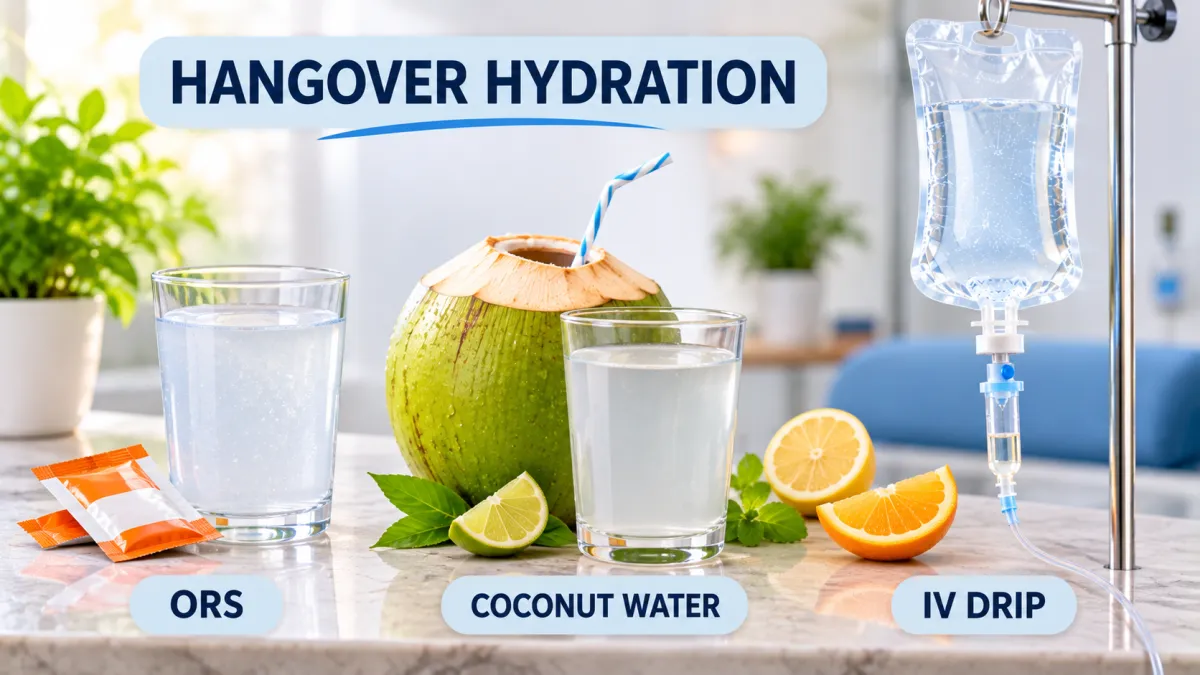
If you have lost fluids through vomiting or diarrhoea, an oral rehydration solution (ORS) may help replace water and important salts.
ORS contains a carefully balanced combination of glucose and electrolytes.
However, you do not need ORS for every hangover. Water and normal meals may be enough for mild thirst.
Eat foods containing potassium
Food can also help you replace nutrients.
Some useful options include:
- Bananas
- Coconut water
- Potatoes
- Spinach
- Curd
- Dal
- Oranges
These foods provide different nutrients and can form part of a balanced recovery meal.
Get enough rest
Alcohol can disturb sleep. Therefore, give your body enough time to rest.
Avoid intense exercise if you feel weak or dizzy.
Avoid more alcohol
Drinking more alcohol the next morning does not cure dehydration.
Instead, it may increase fluid loss and prolong your symptoms.
Water vs ORS vs Coconut Water: Which Is Better?
Different drinks can help with hydration. However, they are not equally useful in every situation.
|
Drink |
Main benefit |
When it may help |
|
Plain water |
Replaces fluids |
Mild thirst and everyday hydration |
|
ORS |
Replaces water and electrolytes |
Fluid loss from vomiting or diarrhoea |
|
Coconut water |
Provides water and potassium |
General hydration |
|
Lemon water |
Provides fluid |
When you want a flavoured drink |
|
Sports drinks |
Provide fluid and some electrolytes |
Certain situations involving prolonged exercise |
For most mild hangovers, water and a balanced meal are reasonable starting points.
However, if you have repeated vomiting or signs of significant dehydration, seek medical advice.
Also, people with kidney or heart conditions should follow their doctor's advice about fluid and potassium intake.
Can an IV Drip Help With Alcohol Dehydration?
Sometimes, people feel very tired, thirsty, or run down after drinking alcohol.
In certain situations, IV fluids may be appropriate. They deliver fluids directly into a vein and can help treat dehydration when oral fluids are not suitable or sufficient.
However, IV therapy is not necessary for every hangover.
For mild dehydration, drinking water or an appropriate oral rehydration solution is usually a simpler option.
How ivital.fit supports hydration
ivital.fit offers vitamin drips for people who feel tired, run down, or hungover, or want to care for their skin.
The service is available at the Jayanagar centre in Bengaluru and through home visits, subject to clinical assessment.
The ivital.fit Hangover Drip includes:
1. Fluids
IV fluids may help replace fluid losses when clinically appropriate.
2. Vitamin C
Vitamin C is an antioxidant that supports normal immune function and helps protect cells from oxidative damage.
3. Thiamine (Vitamin B1)
Thiamine helps your body convert carbohydrates into energy. It is especially important to consider in people with poor nutrition or long-term heavy alcohol use.
4. Glutathione
Glutathione is an antioxidant naturally produced by the body. It helps protect cells from oxidative stress.
How does an ivital.fit Hangover Drip session work?
- Consultation: A clinician discusses your symptoms and medical history.
- Health assessment: Your hydration status, medicines, and allergies are reviewed.
- IV administration: If suitable, the drip is administered under clinical supervision.
- Aftercare: You receive advice based on your health and recovery needs.
The treatment may support hydration and provide selected nutrients. Nevertheless, it cannot remove alcohol from your bloodstream or instantly cure a hangover.
People with kidney disease, heart conditions, or certain allergies may need special assessment before receiving IV fluids.
Most importantly, IV therapy must not replace emergency treatment for alcohol poisoning.
How to Prevent Alcohol Dehydration
The best way to reduce alcohol-related dehydration is to drink less or avoid alcohol.
If you choose to drink, consider these habits:
- Eat a balanced meal before drinking.
- Drink water throughout the day.
- Have water between alcoholic drinks.
- Avoid drinking large amounts quickly.
- Set a limit before going out.
- Avoid mixing alcohol with medicines without medical advice.
- Do not use alcohol to help you sleep.
- Get enough rest after drinking.
Additionally, remember that drinking water does not make you sober or prevent all alcohol-related harm.
Therefore, the safest option is to avoid alcohol.
Conclusion
So, does alcohol dehydrate you? Yes. Alcohol can reduce vasopressin release, increase urine production, and contribute to fluid loss.
Moreover, vomiting, poor sleep and reduced water intake can make dehydration symptoms worse. In some situations, fluid loss may also affect electrolyte balance.
Fortunately, drinking water, eating balanced meals and getting enough rest can support recovery. If you have significant dehydration, seek medical advice rather than relying on home remedies.
For people who need additional hydration and nutritional support, ivital.fit offers vitamin drips at its Jayanagar centre and through home visits, subject to clinical assessment.
Visit ivital for a free consultation at the Jayanagar centre or a home visit, WhatsApp/call, or contact us for more information.
Frequently asked questions
Does alcohol dehydrate you?
Yes. Alcohol can reduce vasopressin release, causing your kidneys to produce more urine. Consequently, you may lose additional fluids and feel thirsty.
Why do I feel thirsty after drinking alcohol?
Alcohol can increase urine production and contribute to fluid loss. Additionally, vomiting, poor sleep and not drinking enough water can make thirst worse.
Can an IV drip treat alcohol dehydration?
IV fluids can help treat dehydration when medically appropriate.
Is ORS better than water after drinking alcohol?
Not always. Water is usually enough for mild thirst. However, ORS may be more useful when you have lost fluids through repeated vomiting or diarrhoea.
References
This article is general information, not medical advice. IV therapy isn’t right for everyone. Discuss your health history, risks and alternatives with a qualified clinician before treatment.