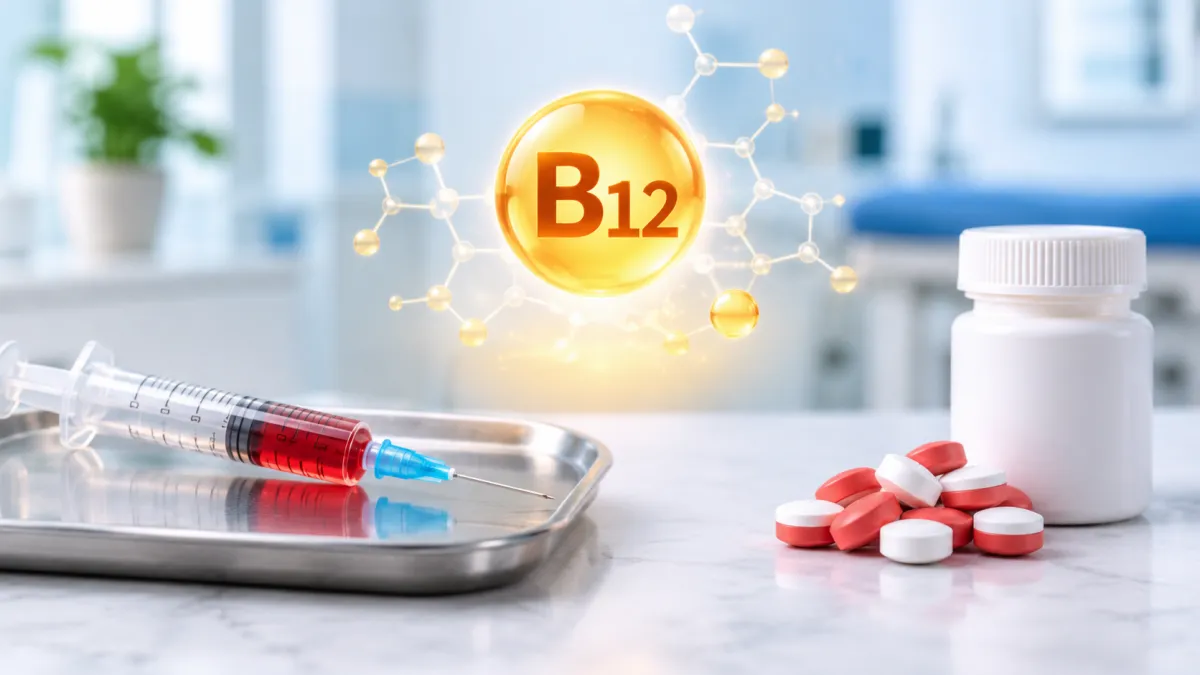
Looking for ways to support energy, fitness, and recovery? You may have come across L-carnitine injection and oral L-carnitine supplements.
Both provide the body with carnitine. However, they work through different delivery methods. More importantly, their absorption, uses, and safety considerations are not the same.
L-carnitine is a naturally occurring substance in the body. It helps transport fatty acids into the mitochondria, where they are used to produce energy. Therefore, it plays an important role in normal energy metabolism.
Today, L-carnitine is popular among fitness enthusiasts and people interested in weight management. Some prefer oral supplements, while others explore injectable forms.
However, does an injection work better than a supplement? Does it help burn more fat? And who should avoid it?
Let's understand the differences before choosing either option.
What Is L-Carnitine and How Does It Work?
L-carnitine is a compound made from amino acids called lysine and methionine. The body produces it mainly in the liver and kidneys. It is also available through certain foods and supplements.
Its main role is to help transport long-chain fatty acids into the mitochondria.
Mitochondria are often called the powerhouses of cells. They help convert nutrients into usable energy.
In simple terms, L-carnitine helps the body use fat as an energy source.
It is found naturally in:
- Red meat.
- Chicken.
- Fish.
- Milk and dairy products.
Additionally, the body can make carnitine on its own. Therefore, most healthy people do not need extra carnitine unless there is a specific medical reason.
However, people with certain medical conditions may develop carnitine deficiency. In such cases, a doctor may recommend supplementation or prescription treatment.
What Is an L-Carnitine Injection?
An L-carnitine injection contains levocarnitine, which is a form of carnitine.
It delivers the substance directly into the body through an injection or intravenous administration, depending on the prescribed formulation.
Unlike oral supplements, an IV formulation does not need to pass through the digestive system before entering the bloodstream.
Prescription levocarnitine injections have specific medical uses. For example, they may be prescribed to treat certain types of carnitine deficiency. They are also used in some patients with end-stage kidney disease who are undergoing dialysis.
Therefore, medical assessment is important before considering an injectable form.
What Are L-Carnitine Supplements?
L-carnitine supplements are available in capsules, tablets, powders, and liquid forms.
They are taken by mouth and pass through the digestive system before entering the bloodstream.
People commonly use these supplements for:
- Fitness and exercise support.
- General nutritional supplementation.
- Weight-management goals.
- Addressing certain medically identified deficiencies.
However, the body absorbs oral supplemental L-carnitine less efficiently than carnitine obtained from food.
Consequently, the amount absorbed can differ between food and supplements.
L-Carnitine Injection vs Supplements: Key Differences
Although both options provide carnitine, their delivery methods and medical uses differ.
Here is a simple comparison.
|
Feature |
L-Carnitine Injection |
Oral L-Carnitine Supplements |
|
Delivery |
Injection or IV administration |
Taken by mouth |
|
Absorption |
Enters the bloodstream directly when given IV |
Absorbed through the digestive system |
|
Bioavailability |
Avoids digestive absorption limitations |
Approximately 14–18% |
|
Medical use |
Certain diagnosed carnitine deficiencies |
Supplementation in selected situations |
|
Convenience |
Requires appropriate medical administration |
Easy to take at home |
|
Possible risks |
Injection reactions and other adverse effects |
Digestive discomfort and other side effects |
|
Medical supervision |
Required |
Medical advice is recommended, especially for long-term use |
The main difference is how carnitine enters the bloodstream.
However, faster delivery does not automatically mean better results. An IV injection may produce different blood levels; it may improve fitness, fat loss, or energy more effectively.
Therefore, the right choice depends on your health needs and medical advice.
How Does Absorption Differ Between Injections and Supplements?
Absorption is one of the biggest differences between these two options.
1. Absorption Through an Injection
When L-carnitine is given intravenously, it enters the bloodstream directly. As a result, it bypasses the digestive system.
This makes IV delivery useful in certain medical situations where prescribed treatment is needed.
However, direct delivery may guarantee better fitness results. The body still needs to regulate and use carnitine properly.
2. Absorption Through Oral Supplements
Oral supplements pass through the stomach and intestines before entering the bloodstream.
During this process, only a portion of the carnitine is absorbed.
Moreover, the amount absorbed can depend on the dose, formulation and individual digestive factors.
Therefore, taking more supplements does not necessarily produce better results.
Which is better for absorption?
IV administration bypasses digestive absorption. Nevertheless, the best option depends on the medical reason for using carnitine, not simply its absorption rate.
Does L-Carnitine Help With Fitness and Fat Loss?
L-carnitine has gained attention in the fitness industry because of its role in fat metabolism.
During exercise, the body uses different energy sources. These include carbohydrates and fats.
Since L-carnitine helps transport fatty acids into mitochondria, researchers have studied its possible effects on exercise performance, recovery, and body composition.
However, the results are mixed.
1. Exercise Performance
Some studies suggest that L-carnitine supplementation may support certain exercise outcomes.
For example, some research has reported changes in muscle soreness, exercise recovery, and physical performance.
However, other studies have found little or no improvement.
2. Weight Management
L-carnitine is often promoted as a fat-burning supplement.
However, its role in weight loss is more limited than many fitness advertisements suggest.
Additionally, the research establishes that L-carnitine injections may have more effect than oral supplements for weight loss.
A balanced diet, regular exercise, and healthy lifestyle habits remain important.
3. Muscle Recovery
Some research has explored whether L-carnitine can help reduce muscle soreness after exercise.
However, the results are not consistent.
Furthermore, muscle recovery depends on several factors, including sleep, hydration, nutrition, and training intensity.
Therefore, L-carnitine should not replace proper recovery habits.
Who Should Consider L-Carnitine Treatment?
Not everyone needs additional carnitine.
The body usually produces enough for its normal functions. In addition, food provides a natural source.
However, certain people may need medical evaluation.
These include:
- People with diagnosed primary carnitine deficiency.
- People with certain metabolic disorders.
- Some patients with kidney disease undergoing dialysis.
- People whose medications or medical conditions affect carnitine levels.
In these situations, a doctor may recommend testing and appropriate treatment.
Importantly, an L-carnitine injection should only be used for an appropriate medical reason and under professional supervision.
Who Should Avoid L-Carnitine Injections or Supplements?
Although carnitine is naturally present in the body, additional doses are not suitable for everyone.
Some people need extra caution before using injections or supplements.
1. People With Kidney Problems
People with kidney disease should consult their doctor before taking carnitine.
The kidneys help regulate the body's chemical balance. Therefore, kidney problems can affect how certain substances are handled.
Additionally, high amounts of carnitine may cause muscle weakness in people with kidney-related complications.
2. People With Seizure Disorders
High doses of carnitine supplements may increase seizure risk in people with seizure disorders.
Consequently, anyone with a history of seizures should seek medical advice before using carnitine.
3. Pregnant or Breastfeeding Women
There is limited evidence about the safety of elective high-dose carnitine supplementation during pregnancy and breastfeeding.
Therefore, speak with your doctor before considering supplements or injections.
4. People Taking Regular Medication
Some medications can affect carnitine levels.
For example, certain anticonvulsant medicines can reduce carnitine levels in the body.
Additionally, people taking long-term medication should discuss possible interactions with their healthcare provider.
5. People With Allergies or Previous Injection Reactions
Injectable levocarnitine can cause hypersensitivity reactions.
Therefore, inform your healthcare professional about previous allergies or reactions to injectable medicines.
What Are the Possible Side Effects of L-Carnitine?
Both injectable and oral forms can cause unwanted effects. However, the type of reaction may differ depending on the delivery method.
Possible side effects of oral supplements include:
- Nausea.
- Vomiting.
- Stomach cramps.
- Diarrhoea.
- Fishy body odour.
These effects are more likely with higher doses.
Possible side effects of injections include:
- Pain or discomfort at the injection site.
- Nausea or stomach discomfort.
- Hypersensitivity reactions.
- Rarely, severe allergic reactions.
Additionally, some people may experience other reactions depending on their health and the formulation used.
If you notice breathing difficulty, facial swelling, or severe dizziness after an injection, seek emergency medical attention.
Most importantly, do not increase your dose or repeat an injection without medical advice.
L-Carnitine Injection or Supplements: Which One Should You Choose?
The answer depends on why you want to use carnitine.
If you have a diagnosed deficiency, your doctor may recommend a specific treatment. In certain cases, prescription injections may be appropriate.
On the other hand, oral supplements may be considered in selected situations where supplementation is suitable.
Before choosing, consider these points:
- For diagnosed deficiency: Follow your doctor's treatment plan.
- For general fitness: Focus on nutrition, exercise, and recovery first.
- For weight management: Combine healthy eating with regular physical activity.
- For unexplained tiredness: Investigate the cause rather than assuming you need carnitine.
- For IV treatment: Discuss the ingredients, dosage, and medical supervision with a qualified professional.
Ultimately, the best approach is the one that matches your health needs and has a clear medical reason.
L-Carnitine Drips at ivital: What Should You Know?
At ivital, the focus is on vitamin drip services for people who want wellness support when they feel tired, run down, or hungover, or want to care for their skin.
However, every IV treatment should begin with an understanding of your health needs.
If you are exploring an L-carnitine injection or drip, ask about the exact formulation, dosage, medical purpose, and possible side effects.
Also, remember that prescription levocarnitine injections have established medical indications for specific deficiency conditions.
Whether you visit the Jayanagar centre or request a home visit, appropriate medical assessment and professional supervision should come first.
A convenient home service should never mean compromising on safety.
Conclusion
Choosing between an L-carnitine injection and oral supplements depends on your health needs, goals, and medical history.
While injections bypass digestive absorption, oral supplements offer a convenient option for selected individuals.
Moreover, people with kidney problems, seizure disorders, allergies, or certain medical conditions should take extra precautions.
Therefore, always consult a qualified healthcare professional before starting carnitine treatment. Focus on proper nutrition, regular exercise, and healthy habits as well.
At ivital, the goal is to make wellness support accessible while keeping informed choices and safety at the centre of every treatment.
Visit ivital for a free consultation at the Jayanagar centre and a home visit, WhatsApp/call, or contact us for more information.
Frequently asked questions
Is L-carnitine injection better than supplements?
Injections bypass digestive absorption, while supplements are taken orally.
How long does L-carnitine take to show results?
There is no fixed timeline. Results depend on individual health, dosage, treatment purpose, and lifestyle.
Who should avoid L-carnitine injections?
People with kidney disease, seizure disorders, certain allergies, and pregnant or breastfeeding women should seek medical advice before considering treatment.
Can I take L-carnitine supplements every day?
Daily supplementation may be suitable for certain people. However, the correct dose and duration depend on individual health needs. Consult your healthcare professional before regular use.
References
This article is general information, not medical advice. IV therapy isn’t right for everyone. Discuss your health history, risks and alternatives with a qualified clinician before treatment.