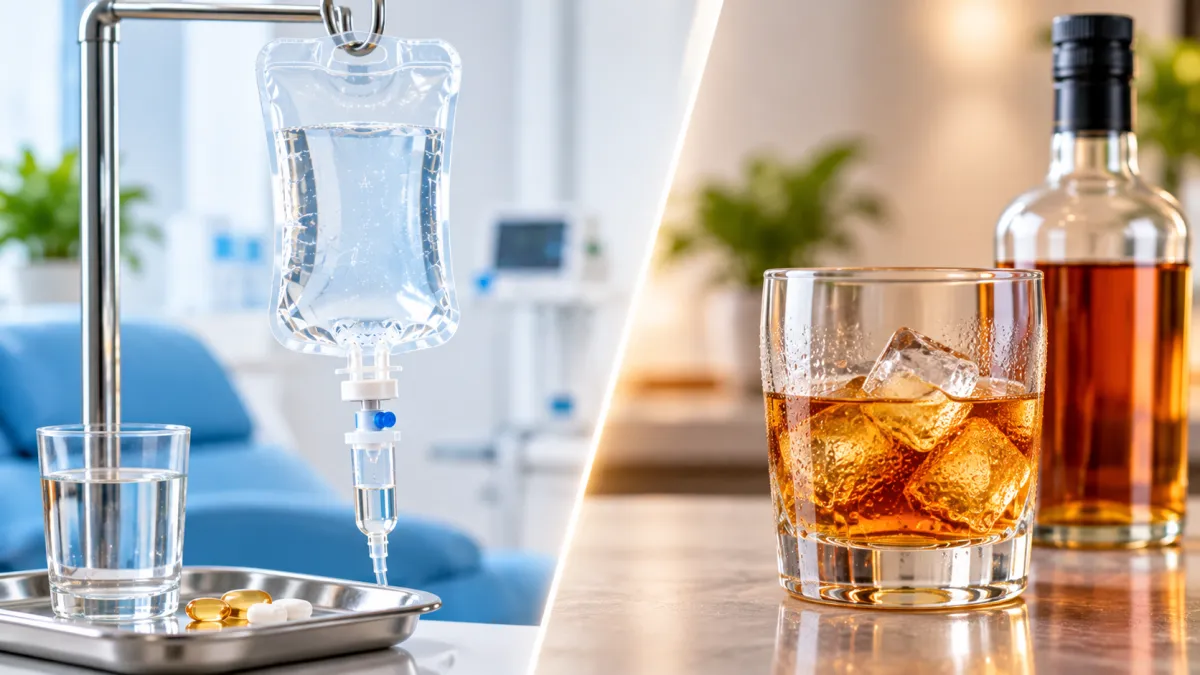
Can you drink alcohol after an IV drip? It is a common question, especially after a hydration or vitamin infusion.
The short answer is that it is better to wait. Although an IV drip delivers fluids directly into your bloodstream, alcohol can increase fluid loss. As a result, you may feel thirsty, tired, or dehydrated again.
An alcohol after an IV drip question is especially important if you have received treatment for dehydration, fatigue or a hangover.
Moreover, alcohol can affect your sleep, stomach and overall recovery. Therefore, drinking immediately after an infusion may work against your wellness goals.
At ivital, vitamin drips are available for people who feel tired, run down, or hungover, or want to care for their skin. However, understanding how alcohol affects your body is important before choosing an IV treatment.
In this blog, we explain why you should wait, how alcohol affects hydration, and what you should do after an IV drip.
Why Is It Better to Avoid Alcohol After an IV Drip?
An IV drip delivers fluids and selected nutrients directly into a vein. Consequently, it can help provide fluids when a healthcare professional considers IV hydration appropriate.
However, drinking alcohol soon after an infusion may affect your hydration and recovery.
Here are the main reasons why waiting is a better choice.
1. Alcohol Can Increase Fluid Loss
Alcohol affects a hormone called vasopressin. This hormone helps your kidneys control how much water they remove through urine.
When you drink alcohol, vasopressin activity can decrease. As a result, your kidneys may produce more urine.
Consequently, you may lose more fluid than usual.
This can lead to:
- Increased thirst.
- Dry mouth.
- Headaches.
- Dark-coloured urine.
- Dizziness.
- Tiredness.
Therefore, alcohol can work against your efforts to stay hydrated after an IV drip.
2. Alcohol Can Affect Your Recovery
Your body needs enough fluids, food, and rest to recover.
However, alcohol can interfere with several of these processes.
For example, it can irritate your stomach and cause nausea. It can also disturb your sleep.
As a result, you may wake up feeling tired even after receiving an IV infusion.
Furthermore, alcohol can make existing symptoms worse. If you received an IV drip because of a hangover, drinking again may bring back similar symptoms.
3. Alcohol Can Increase Dizziness
Some people experience light-headedness after drinking alcohol.
In addition, alcohol can affect blood pressure, balance, and coordination.
If you are already recovering from dehydration, these effects may make you feel worse.
Therefore, avoid alcohol until you feel well again.
4. Alcohol May Interact With Medicines
Some IV treatments may be given alongside medicines or other treatments.
However, alcohol can interact with certain medicines. These interactions may increase nausea, drowsiness, dizziness and other side effects.
For example, alcohol can be dangerous when combined with some pain medicines, sedatives, and antibiotics.
Therefore, always ask your healthcare professional whether alcohol is safe with your treatment and medicines.
Does Alcohol Undo the Hydration From an IV Drip?
Alcohol does not literally remove the fluids that were given through an IV. However, it can work against your hydration efforts.
Here is why.
An IV drip provides fluids directly into your bloodstream. Your body then distributes and regulates those fluids.
In contrast, alcohol can increase urine production, especially during the early hours after drinking.
Consequently, you may lose additional fluids.
Therefore, the benefits of hydration may not last as expected.
How Long Should You Wait Before Drinking Alcohol After an IV Drip?
There is no single waiting period that is suitable for every IV treatment.
The right timing depends on:
- The type of IV drip.
- The ingredients used.
- Your hydration level.
- Your health condition.
- Any medicines you are taking.
- The reason you received the infusion.
As a general precaution, avoid alcohol for the rest of the day after an IV wellness drip. It is also sensible to wait until you feel fully recovered and hydrated.
However, some medicines and medical conditions require a longer period without alcohol.
For instance, certain medications can interact with alcohol even several hours after treatment.
Therefore, ask your healthcare professional for advice based on your actual infusion.
What Should You Drink After an IV Drip?
After an IV drip, focus on simple ways to maintain hydration.
Fortunately, you do not need complicated drinks or special products to support everyday hydration.
Consider these options:
1. Plain Water
Water is a simple choice for maintaining fluid levels.
Drink it regularly throughout the day. However, follow any fluid restrictions given by your doctor.
2. Oral Rehydration Solution
If you have lost fluids due to vomiting or diarrhoea, an oral rehydration solution may help replace water and electrolytes.
However, use it when appropriate and follow medical advice.
3. Fresh Foods
Fruits and vegetables also provide water.
For example, watermelon, oranges, cucumber, and other water-rich foods can support your daily fluid intake.
4. Balanced Meals
Eat regular meals with a balance of carbohydrates, protein, and healthy fats.
Additionally, include fruits, vegetables, and whole grains.
This helps support your general nutritional needs during recovery.
What Should You Avoid After an IV Drip?
Although an IV drip may help provide fluids, your habits after treatment still matter.
For better recovery, avoid the following:
- Alcohol: It can increase fluid loss and disturb sleep.
- Excessive caffeine: Large amounts may affect sleep and can contribute to discomfort.
- Heavy exercise: Avoid intense workouts if you feel weak or dehydrated.
- Skipping meals: Your body needs regular nutrition.
- Poor sleep: Rest supports normal recovery.
- Drinking more alcohol to treat a hangover: This can prolong the cycle of drinking and feeling unwell.
Most importantly, do not assume that an IV drip allows you to drink more alcohol safely.
Can You Get a Hangover After Drinking Alcohol Following an IV Drip?
Yes. An IV drip does not prevent a future hangover.
A hangover can involve several factors, including:
- Dehydration.
- Poor sleep.
- Stomach irritation.
- Inflammation.
- Changes in blood sugar and other body processes.
Therefore, even if you receive hydration before drinking, you can still experience a hangover.
In fact, drinking more alcohol may make symptoms worse.
Common hangover symptoms include headaches, nausea, thirst, fatigue, and sensitivity to light or sound.
The safest way to avoid an alcohol-related hangover is to avoid alcohol.
How Does ivital Support Your Wellness Routine?
ivital.fit offers vitamin drips for people who feel tired, run down, or hungover, or want to care for their skin.
Whether you prefer visiting the Jayanagar centre or requesting a home visit, ivital offers options for discussing your wellness needs.
The available services include:
- Vitamin drip options for wellness support.
- Myers' Cocktail.
- Glow Drip.
- Hangover Drip.
- Home visits, subject to availability and clinical suitability.
- Consultation before treatment.
Furthermore, the right treatment depends on your health, symptoms, and medical history.
Therefore, speak with the ivital clinical team before choosing a drip. Always share details of your alcohol intake, medicines, and existing health conditions.
Conclusion
Drinking alcohol after an IV drip is not a good idea if your goal is to stay hydrated and recover.
Although an IV infusion provides fluids directly into your bloodstream, alcohol can increase urine production, affect sleep, and cause further dehydration.
Moreover, alcohol may interact with certain medicines and make existing symptoms worse.
Therefore, it is better to avoid alcohol for the rest of the day after a wellness infusion. Follow your clinician's advice if you need a longer break.
Visit ivital for a free consultation at the Jayanagar centre and a home visit, WhatsApp/call, or contact us for more information.
Frequently asked questions
Can I drink alcohol immediately after an IV drip?
It is better to avoid alcohol immediately after an IV drip. Alcohol can increase fluid loss, disturb sleep and affect recovery. Ask your healthcare professional when it is safe to drink again.
Does alcohol cancel the effects of an IV drip?
Alcohol does not directly remove the fluids given through an IV. However, it can increase urine production and contribute to dehydration. Therefore, it may work against your hydration goals.
What should I drink after an IV drip?
Plain water is a good choice for everyday hydration. If you have lost fluids due to vomiting or diarrhoea, an oral rehydration solution may be helpful. Follow your doctor's advice.
How long should I wait to drink alcohol after an IV drip?
As a general precaution, avoid alcohol for the rest of the day after a wellness infusion. However, the waiting period depends on the ingredients, medicines and your health condition.
References
This article is general information, not medical advice. IV therapy isn’t right for everyone. Discuss your health history, risks and alternatives with a qualified clinician before treatment.