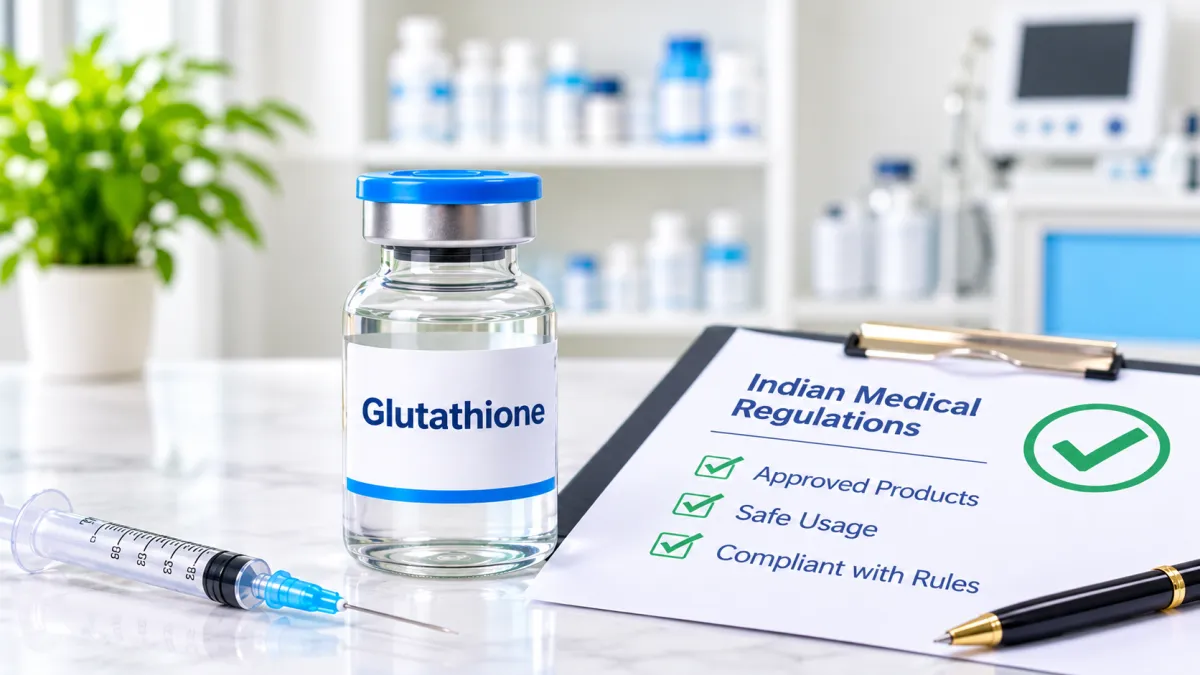
If you are considering glutathione for skin or wellness, you may have one important question: is glutathione banned in India?
The short answer is no. Glutathione is not subject to a blanket ban in India.
In fact, the rules depend on how the product is made, sold, and used. For example, oral health supplements come under food safety regulations. On the other hand, injectable glutathione comes under drug regulations.
Moreover, a product being available online does not automatically mean it is approved. Similarly, a clinic offering an injection does not prove that the product or its intended use is authorised.
Therefore, it is important to understand the rules before starting treatment.
This guide explains the Indian regulatory position, the difference between oral and injectable glutathione, and how to check what a clinic is using.
Is Glutathione Banned in India?
No, glutathione is not completely banned in India. However, different forms have different regulatory requirements.
The two main categories are:
- Oral glutathione: Tablets, capsules and other products taken by mouth.
- Injectable glutathione: Products administered through an injection or IV drip.
The Food Safety and Standards Authority of India (FSSAI) regulates health supplements and nutraceuticals. Meanwhile, the Central Drugs Standard Control Organisation (CDSCO) and the relevant State Drug Control Authorities regulate medicines.
Consequently, you should not treat an oral supplement and an injectable medicine as the same product.
Furthermore, approval for one form or use does not automatically approve another.
What Do Indian Rules Say About Oral Glutathione?
Oral glutathione products are regulated under India's food safety framework when they are marketed as health supplements or nutraceuticals.
FSSAI provides rules for ingredients, product composition, labelling, and permitted claims.
For example, its published ingredient list includes glutathione and S-acetyl glutathione. A listed ingredient, however, does not mean every product containing it has automatic approval.
Additionally, manufacturers must follow the applicable requirements for their product category.
Before buying an oral glutathione supplement, check:
- FSSAI licence number: Look for the manufacturer's or marketer's valid licence details.
- Ingredient list: Check whether glutathione is clearly mentioned.
- Dosage information: Review the amount per serving.
- Manufacturer details: Check the company name and address.
- Expiry date: Avoid expired or poorly labelled products.
- Health claims: Be careful with products promising permanent skin whitening
What Are the Rules for Injectable Glutathione in India?
Injectable glutathione is different from an oral supplement.
Since it enters the body through an injection, it must meet the applicable drug regulations. These include requirements relating to manufacturing, quality, licensing, and approved indications.
Importantly, an ingredient being used in a medicine does not mean every formulation, manufacturer, route, or purpose is approved.
What About Glutathione Skin-Whitening Injections?
This is where the distinction becomes especially important.
Therefore, a clinic cannot simply describe an injectable product as a cosmetic treatment and assume that it is permitted.
A product intended for injection must meet the applicable drug requirements. Furthermore, its approved indications and the claims made by the clinic must be checked separately.
Oral vs Injectable Glutathione: What Is the Difference?
Although both forms contain glutathione, their regulatory requirements are different.
|
Factor |
Oral glutathione |
Injectable glutathione |
|
Common forms |
Tablets and capsules |
Injections and IV preparations |
|
Main regulator |
FSSAI for food supplements |
Drug regulatory authorities |
|
Main requirements |
Food safety and labelling rules |
Drug manufacturing and marketing requirements |
|
Product checks |
FSSAI licence and label |
Applicable drug licence and product authorisation |
|
Main concern |
Product quality |
Product quality, sterility and medical safety |
Therefore, always check the exact product category before making a decision.
How to Check What a Clinic Is Using
Choosing a clinic requires more than checking its website or treatment menu. You should also understand the product being offered.
Here are seven important checks.
1. Ask for the Product Name
First, ask the clinic for the complete product name.
Do not accept answers such as "premium glutathione" or "imported whitening injection."
Instead, ask for the actual brand and manufacturer.
2. Check the Manufacturing Details
Next, check the product packaging.
Look for:
- Manufacturer's name and address.
- Batch or lot number.
- Manufacturing date.
- Expiry date.
- Storage instructions.
- Composition and strength.
These details help you identify the product and check its quality.
3. Ask About the Drug Licence
If the clinic offers injectable glutathione, ask which licensed manufacturer supplies it.
Also, ask for relevant manufacturing or import licence details and product authorisation.
4. Check the Approved Use
This is an important step.
Ask the clinic what the product is approved to treat. Also, ask whether the proposed treatment is an approved indication or an off-label use.
5. Check the Healthcare Professional's Qualifications
An injectable treatment requires medical knowledge.
Therefore, ask who will assess you and administer the treatment.
Check their professional qualifications and relevant registration. Also, ask whether they can manage an allergic reaction or another emergency.
6. Ask About Storage and Sterility
Injectable products need proper handling.
For example, ask how the product is stored and prepared. Also, confirm that sterile, single-use needles and syringes are used.
Furthermore, the clinic should follow safe disposal practices.
7. Ask for Clear Treatment Information
Finally, ask for a written treatment plan.
It should explain the proposed product, dose, route, possible side effects, and expected benefits.
Do not proceed if the clinic refuses to share basic product information.
Warning Signs to Watch Out for Before Treatment
Some clinics may use strong marketing claims to attract customers. However, these claims should not replace medical evidence.
Be careful if a clinic:
- Promises permanent skin whitening.
- Guarantees results within a fixed number of sessions.
- Refuses to reveal the product name.
- Cannot explain the product's regulatory status.
- Offers injections without a medical assessment.
- Uses products without proper labels or batch details.
- Claims that imported products are automatically safer.
- Encourages you to ignore possible side effects.
Is Glutathione Safe for Skin Whitening?
Glutathione is a natural antioxidant. It helps protect cells from oxidative damage.
However, its use for skin whitening is a separate issue.
Some studies suggest that glutathione may affect melanin production. Nevertheless, the evidence for long-term skin-lightening benefits remains limited.
Additionally, injectable glutathione can cause unwanted reactions. These may include allergic reactions and complications linked to poor product quality or unsafe administration.
Therefore, do not assume that a treatment is safe simply because glutathione occurs naturally in the body.
If your concern is pigmentation, consult a qualified dermatologist. They can identify the cause and suggest suitable options.
Why Choose ivital for Wellness and Vitamin Drips?
At ivital, wellness services focus on people who feel tired, run down, or hungover, or want to explore skin-focused wellness care.
You can explore available vitamin drips and wellness services in Jayanagar or enquire about home visits.
However, before choosing any injectable treatment, ask about the product, its regulatory status, and its medical suitability.
A professional consultation can help you understand your options. Furthermore, it allows you to discuss your health history, treatment goals, and possible risks.
Most importantly, choose a service that values medical guidance and transparent product information rather than unrealistic promises.
Conclusion
So, is glutathione banned in India? No, there is no blanket ban on glutathione. However, its legal status depends on the product form, regulatory category, and intended use.
Oral supplements must follow applicable FSSAI requirements. In contrast, injectable products must meet the relevant drug regulations.
Therefore, do not rely only on a clinic's advertisements. Check the product name, manufacturer, licence details, and approved use. Also, confirm the healthcare professional's qualifications.
Ultimately, informed decisions can help you avoid misleading claims and unsafe treatments. When it comes to injectable wellness products, safety and regulatory compliance should always come first.
Visit ivital for a free consultation at our Jayanagar centre or enquire about a home visit. WhatsApp or call us, or contact us for more information.
Frequently asked questions
Is glutathione banned in India in 2026?
No. Glutathione is not completely banned in India. However, oral supplements and injectable products follow different regulations. Each product must meet the requirements for its category and intended use.
How can I check whether a glutathione product is approved?
Check the manufacturer's details, product name, batch number and licence information. For oral supplements, check FSSAI details. For injectable products, ask for the applicable drug licence and product authorisation.
Can clinics offer glutathione IV drips in India?
A clinic must use products that meet applicable drug requirements and follow relevant medical and professional standards.
Are glutathione injections legal in India?
Injectable glutathione must comply with applicable drug regulations. Its legal status depends on the specific formulation, manufacturer, licence, and approved use.
References
This article is general information, not medical advice. IV therapy isn’t right for everyone. Discuss your health history, risks and alternatives with a qualified clinician before treatment.