Vitamin C is known for its role in immune health, collagen production, and wound healing. However, high-dose vitamin C given through an IV needs careful screening. Vitamin C and G6PD Deficiency are closely linked because high doses of vitamin C may cause red blood cell damage in people with glucose-6-phosphate dehydrogenase (G6PD) deficiency.
This condition is often inherited. Many people may have it without knowing. Therefore, a G6PD test can be an important safety step before high-dose IV vitamin C.
At ivital, safety should come before any vitamin drip. So, let us understand what G6PD deficiency means, why testing matters, and who should take extra care.
What Is G6PD Deficiency?
G6PD stands for glucose-6-phosphate dehydrogenase. It is an enzyme found inside red blood cells.
This enzyme helps protect red blood cells from damage caused by oxidative stress. In simple terms, it helps these cells handle certain chemicals and stress.
However, people with G6PD deficiency have lower enzyme activity. As a result, their red blood cells may break down more easily when exposed to certain triggers.
This breakdown is called haemolysis. When it happens quickly, it can lead to haemolytic anaemia.
G6PD deficiency is usually inherited. It is more common in people with ancestry from parts of Africa, the Mediterranean, the Middle East and Asia. However, anyone can have the condition.
What Is the Link Between Vitamin C and G6PD Deficiency?
Vitamin C is an antioxidant. It helps protect cells from damage. However, very high doses may behave differently from normal dietary amounts.
At high concentrations, vitamin C can have pro-oxidant effects under certain conditions. This means it may increase oxidative stress rather than reduce it.
Normally, red blood cells use protective systems to manage this stress. However, people with G6PD deficiency have a weaker defence against oxidative damage.
Therefore, high-dose IV vitamin C may increase the risk of red blood cell breakdown in these individuals.
This does not mean that vitamin C from food is dangerous. Eating fruits and vegetables that contain vitamin C is generally safe for people with G6PD deficiency.
Why Is a G6PD Test Important Before IV Vitamin C?
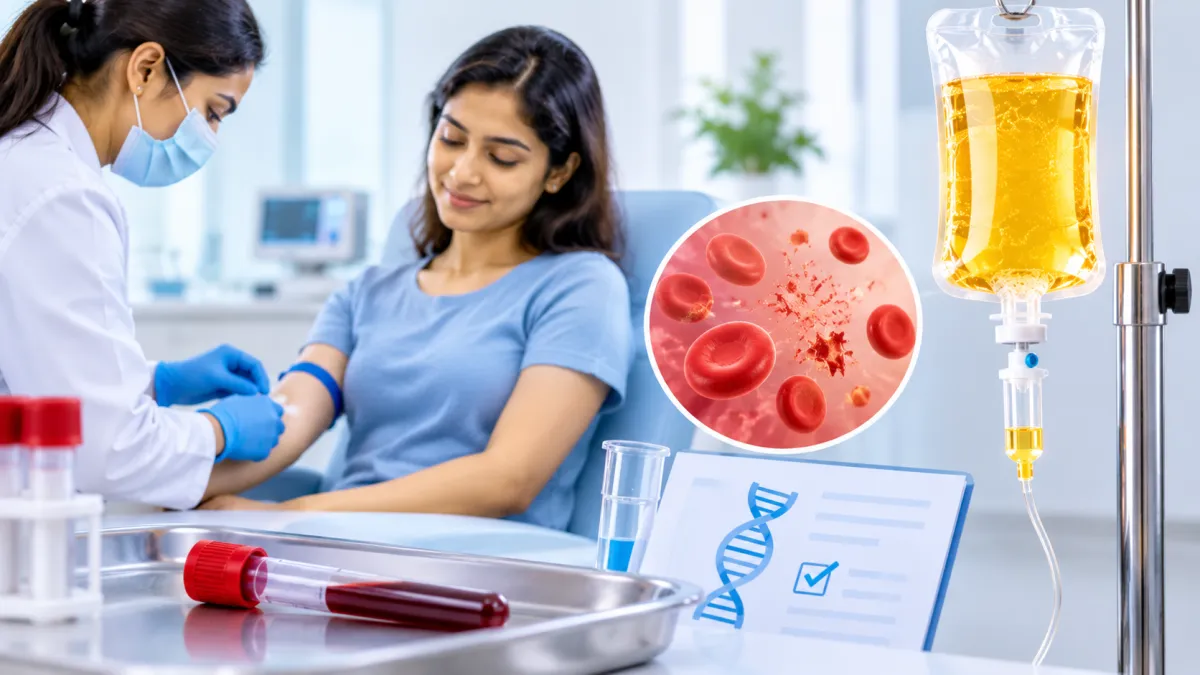
A G6PD test measures the activity of the G6PD enzyme in red blood cells.
Before high-dose IV vitamin C, this test can help identify people who may be at risk of haemolysis.
Here is why it matters:
- It checks enzyme activity: The test helps identify low G6PD activity.
- It supports safer treatment decisions: A clinician can decide whether IV vitamin C is suitable.
- It may prevent serious complications: Identifying deficiency can help avoid a treatment that may trigger red blood cell damage.
- It helps guide medical care: The result gives the healthcare team useful information before treatment.
Most importantly, a vitamin drip should not begin simply because someone wants an energy or skin boost. A proper health review must come first.
What Are the Symptoms of G6PD Deficiency?
Many people with G6PD deficiency do not have symptoms in everyday life. In fact, they may discover the condition only after a trigger causes red blood cell breakdown.
Symptoms of haemolysis may include:
- Sudden tiredness or weakness
- Pale or yellow skin
- Yellowing of the eyes
- Dark or tea-coloured urine
- Shortness of breath
- Rapid heartbeat
- Dizziness
- Pain in the back or abdomen
These symptoms may appear after exposure to certain medicines, infections or other triggers.
Seek urgent medical care if you develop dark urine, yellow eyes, severe weakness or breathing difficulty after an infusion or medication.
How Is G6PD Deficiency Tested?
A G6PD test is usually done with a blood sample. The most useful test for diagnosis is a quantitative G6PD enzyme activity test.
It measures how well the enzyme works in red blood cells. The laboratory then compares the result with its reference range.
There are also screening tests. However, a quantitative test may be needed to confirm an abnormal or unclear result.
A few points are important:
- A normal result does not always rule out G6PD deficiency.
- Testing during or soon after a haemolytic episode may give a falsely normal result.
- A recent blood transfusion may affect the result.
Therefore, tell your doctor about recent illness, jaundice, blood transfusions, and any family history of G6PD deficiency. Your doctor may recommend repeat testing or genetic testing when needed.
Who Should Consider a G6PD Test Before High-Dose IV Vitamin C?
A healthcare professional may recommend testing before high-dose IV vitamin C, especially if you:
- Have a family history of G6PD deficiency.
- Have had unexplained jaundice.
- Have experienced episodes of anaemia.
- Have had dark urine after an illness or medication.
- Come from a population where G6PD deficiency is more common.
- Have never been tested but are considering high-dose IV vitamin C.
Importantly, G6PD deficiency can affect people of any background. So, family history and medical history matter.
A test is particularly useful when the planned vitamin C dose is high. Your clinician should decide whether testing is needed for the specific formulation and dose.
What Happens If Someone With G6PD Deficiency Gets High-Dose Vitamin C?
The main concern is haemolysis. This means red blood cells break down faster than the body can replace them.
As a result, the person may develop haemolytic anaemia.
The risk depends on several factors. These include enzyme activity, vitamin C dose, the person's health and other medicines or triggers.
The prescribing information for intravenous ascorbic acid warns that people with G6PD deficiency may face severe haemolysis. It also advises monitoring blood counts and stopping treatment if haemolysis is suspected.
For this reason, high-dose IV vitamin C should never be treated as a routine wellness procedure for someone with known or suspected G6PD deficiency. A doctor must assess the risks and decide on the safest approach.
Is Vitamin C From Food Safe for People With G6PD Deficiency?
Yes. Normal amounts of vitamin C from food are generally safe for people with G6PD deficiency.
In fact, vitamin C is an essential nutrient. It supports collagen formation, helps the body absorb iron, and supports normal immune function.
Good food sources include:
- Oranges and sweet lime
- Guava
- Amla
- Kiwi
- Strawberries
- Capsicum
- Broccoli
However, food sources are different from high-dose IV treatment. An IV can deliver much larger amounts directly into the bloodstream.
Therefore, do not avoid fruits and vegetables because of G6PD deficiency. Instead, discuss supplements and high-dose vitamin C treatments with your doctor.
What Should You Check Before Booking a Vitamin C IV Drip at ivital?
Before choosing a vitamin drip, make sure your health history is reviewed. This is important even if you feel healthy.
Here are some useful steps:
- Share your medical history: Tell the clinician about G6PD deficiency, anaemia, kidney problems, and past reactions to medicines.
- Discuss the dose: Ask how much vitamin C the drip contains.
- Ask about testing: Find out whether a G6PD test is appropriate before the planned dose.
- Share your medicines: Mention all prescription medicines, supplements and recent treatments.
- Understand the risks: Ask about possible side effects and warning signs.
- Follow medical advice: Do not proceed if the clinician advises against the infusion.
At ivital, vitamin drips are offered for people who want support with wellness, skin care, or recovery from feeling run down. However, an IV drip is not suitable for everyone.
A consultation helps the clinical team understand your needs and review possible risks. If high-dose vitamin C is being considered, G6PD status should be discussed before treatment.
Here are the seven ivital options that list vitamin C as an ingredient.
|
ivital drip |
Listed ingredients |
Price per session |
|
Vitamin C, Magnesium, Calcium, Vitamin B12 |
₹3,800 |
|
|
Vitamin C, Glutathione, ALA |
₹6,000 |
|
|
Vitamin C, Vitamin B Complex, NAC |
₹3,500 |
|
|
Vitamin C, Thiamine, Glutathione |
₹4,400 |
|
|
Glutathione, Vitamin C, Vitamin E, Peptides |
₹7,000 |
|
|
Vitamin C, Glutathione, L-Carnitine |
₹4,000 |
|
|
Glutathione, Vitamin C, Vitamin B Complex |
₹4,500 |
Can a Person With G6PD Deficiency Ever Receive Vitamin C Through an IV?
This depends on the clinical situation and the dose. G6PD deficiency does not mean every form of vitamin C is automatically unsafe.
However, high-dose IV vitamin C can carry a bit of risk. The official prescribing information for injectable ascorbic acid describes haemolysis in people with G6PD deficiency. It recommends dose adjustment and monitoring in its approved medical use.
That guidance should not be taken as approval for wellness drips in people with G6PD deficiency. A specialist must assess the individual case. For an elective wellness infusion, avoiding high-dose treatment may be the safer choice.
Conclusion
Vitamin C has many important roles in the body. However, high-dose IV vitamin C needs careful medical assessment.
The link between Vitamin C and G6PD Deficiency is especially important. People with G6PD deficiency may face a higher risk of red blood cell damage after high-dose treatment.
Therefore, a G6PD test can help identify this risk. It also helps clinicians make safer treatment decisions.
At ivital, your health and safety should always come first. So, discuss your medical history, ask about the vitamin C dose, and complete any recommended tests before starting an IV drip.
Visit ivital for a free consultation at the Jayanagar centre and a home visit, WhatsApp/call, or contact us for more information.
Frequently asked questions
Why is a G6PD test needed before high-dose IV vitamin C?
A G6PD test checks the enzyme activity in red blood cells. People with low activity may have a higher risk of haemolysis after high-dose IV vitamin C. Therefore, testing can help identify this risk before treatment.
Can vitamin C cause haemolysis in people with G6PD deficiency?
Yes. High doses of vitamin C may trigger red blood cell breakdown in people with G6PD deficiency. The risk depends on the dose and the person's health.
What are the warning signs of haemolysis?
Warning signs include dark urine, yellow eyes, pale skin, sudden weakness, dizziness, and shortness of breath. Seek medical help if these symptoms appear after an infusion.
Should everyone get a G6PD test before a vitamin C IV drip?
Not necessarily. The need for testing depends on the planned dose, medical history, and clinical assessment. However, screening is important when high-dose IV vitamin C is being considered.
References
This article is general information, not medical advice. IV therapy isn’t right for everyone. Discuss your health history, risks and alternatives with a qualified clinician before treatment.